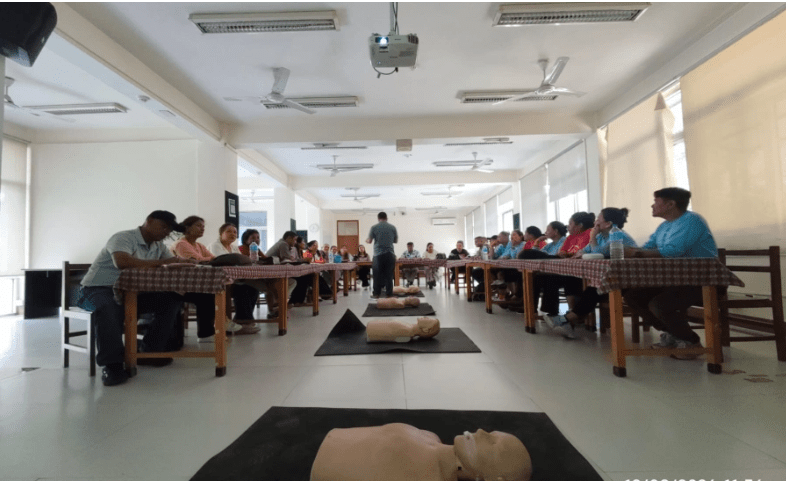
Nepal Cycle Society trains cyclists in basic life support skills
As part of the initiative, 28 cyclists received Immediate Response and Basic Life Support Training at Dhulikhel Hospital on Wednesday, August 12.
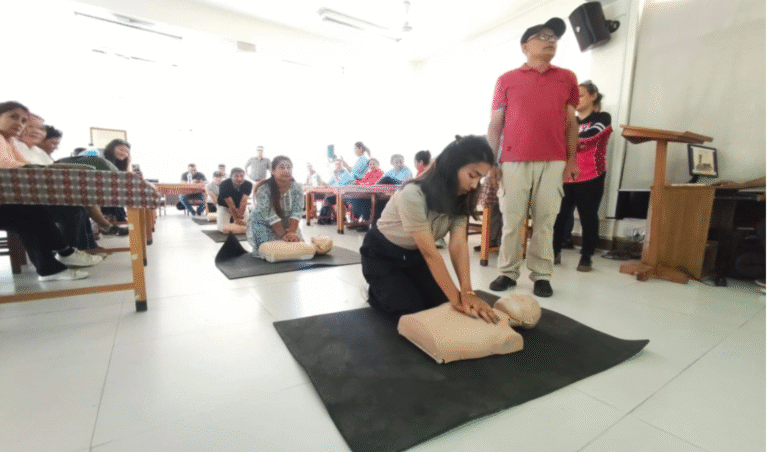
When an emergency strikes on the road, knowing how to respond in the first few minutes can make the difference between life and death. With this in mind, the Nepal Cycle Society (NCS), in collaboration with Dhulikhel Hospital, has begun equipping cyclists with basic life support skills.
As part of the initiative, 28 cyclists received Immediate Response and Basic Life Support Training at Dhulikhel Hospital on Wednesday. The program was the second session of the training series, with a third session scheduled to be held after Tihar.
According to NCS, cycling activist and program coordinator Ratna Shrestha, the initiative aims to train a total of 250 cyclists in life-saving skills. “Cyclists are among the most vulnerable road users, so they need to know how to protect themselves as well as help others in emergencies,” Shrestha said.
The training covers basic life support and emergency first-aid skills that cyclists can use in road accidents and other critical situations. Shrestha said the initiative would also help strengthen solidarity within the cycling community and promote a greater appreciation for the value of life.
With heart attacks increasingly affecting younger people as well, basic emergency-response skills can prove crucial in providing immediate assistance before a patient reaches a hospital, he said.
Recognizing the importance of such training, NCS has been working with Dhulikhel Hospital and other hospitals to organize similar programs for cyclists.
NCS has also been involved in promoting peace and tolerance. Earlier this month, it organized a cycle rally to promote social harmony and pay tribute to those who lost their lives in the conflicts in the Terai and mountaineers who perished in an avalanche on Broad Peak.